
Quebec Election 2026: What Do the Numbers Tell Us?
A look at votes, representation and annual public financing for Quebec political parties.
— سامر مجذوب
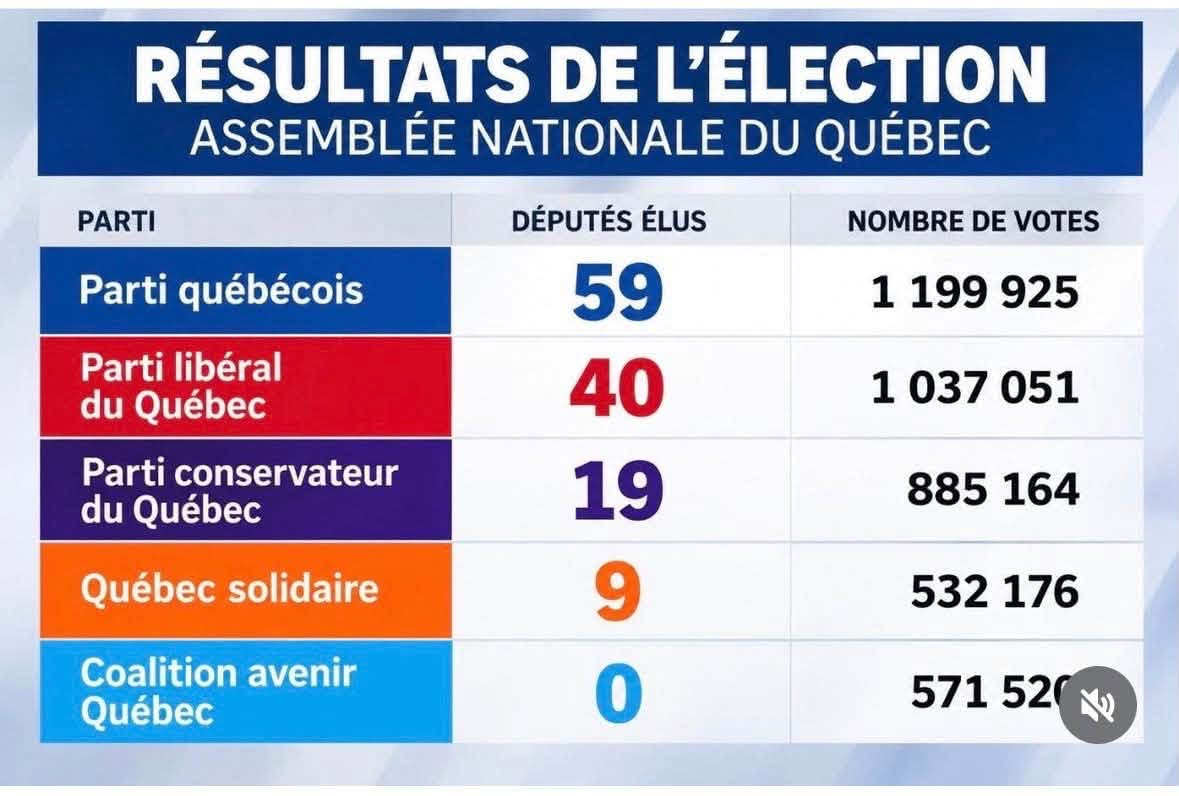
The results of Quebec’s election held on October 5, 2026 are interesting not only for who won, but also for what the numbers reveal about our democratic system.
The Parti québécois received about 28% of the votes and won 59 of the 127 seats. The PLQ received about 24.5% and won 40 seats, while the PCQ received about 21% and won 19 seats.
Perhaps most strikingly, the CAQ received more than 570,000 votes — about 13.5% — but won no seats.
There is also a financial dimension. In Quebec, the annual public allowance for political parties is distributed according to their share of valid votes, not the number of seats they win. At the 2026 rate of $1.99 per registered elector, this means that even a party winning no seats can continue to receive significant public financing based on the votes it received.
So the results of the October 5, 2026 election can be looked at through three different lenses:
Votes — Representation — Public financing
They do not produce the same picture.
- PQ: 28.4% of votes — 59 seats — $3.62M annual public funding.
- PLQ: 24.5% of votes — 40 seats — $3.13M annual public funding.
- PCQ: 20.9% of votes — 19 seats — $2.67M annual public funding.
- CAQ: 13.5% of votes — 0 seats — $1.72M annual public funding.
- QS: 12.6% of votes — 9 seats — $1.60M annual public funding.
Whatever our political preferences, these numbers remind us that every vote matters, that representation can look very different from the popular vote, and that those elected have a responsibility to represent all Quebecers — not only those who voted for them.
The election is over. The responsibility to listen, govern fairly and bring Quebecers together now begins.